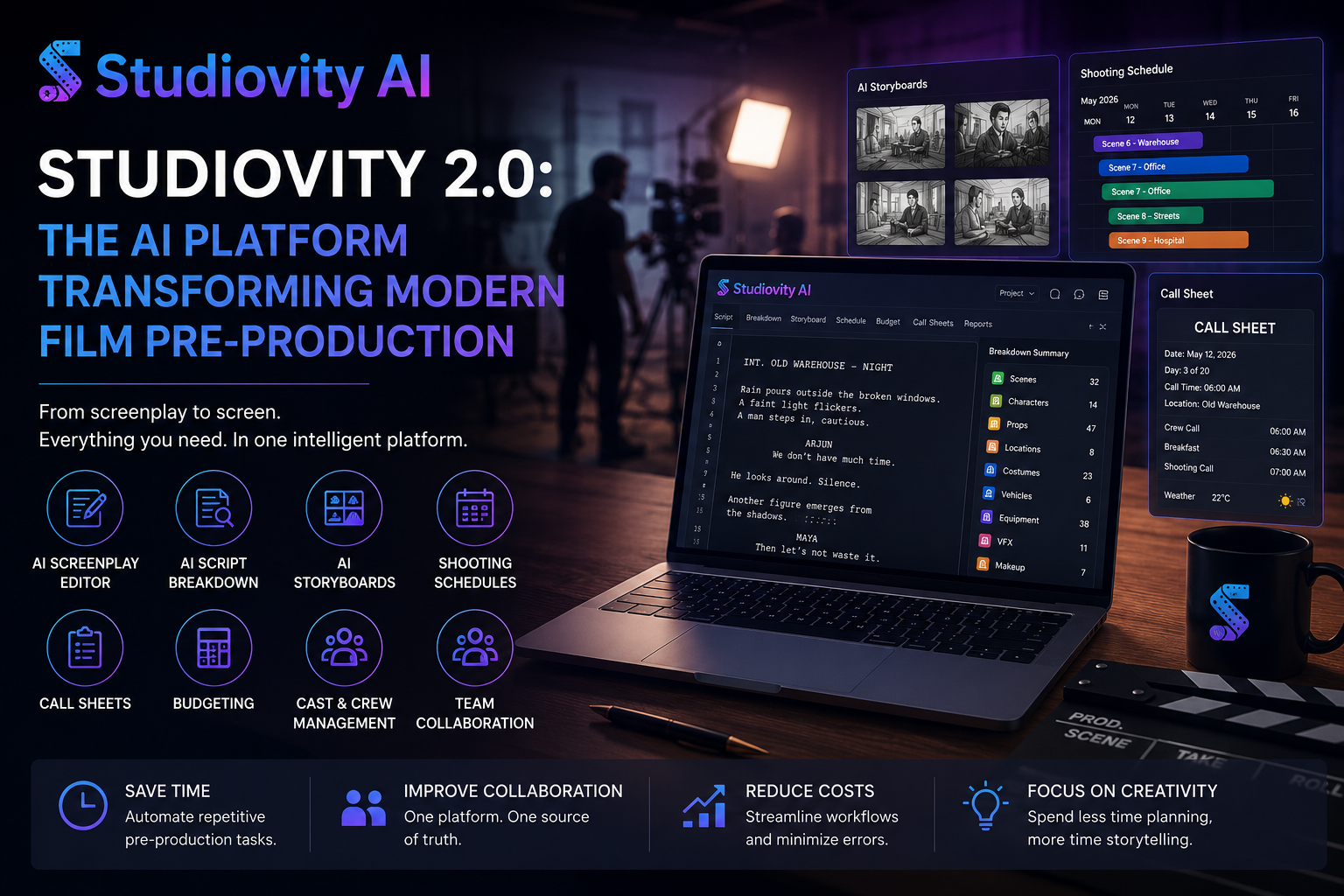

Studiovity 2.0 has officially launched, and it marks one of the most significant shifts yet in how films get planned and produced. Built as an AI-powered pre-production and film production management platform, Studiovity 2.0 doesn’t just digitize the old paperwork-heavy workflow — it puts artificial intelligence directly inside every stage of the process, from the first draft of a screenplay to the final call sheet before a shoot day.
That’s the real story of Studiovity 2.0: AI isn’t bolted on as a single feature, it runs through the entire platform. Writing, breakdown, storyboarding, scheduling, budgeting, and call sheets are all connected and all AI-assisted, so a change made in one place automatically ripples through the rest of the production plan. You can explore the complete platform at www.studiovity.com.
AI Scheduling: Hours of Work Down to Minutes
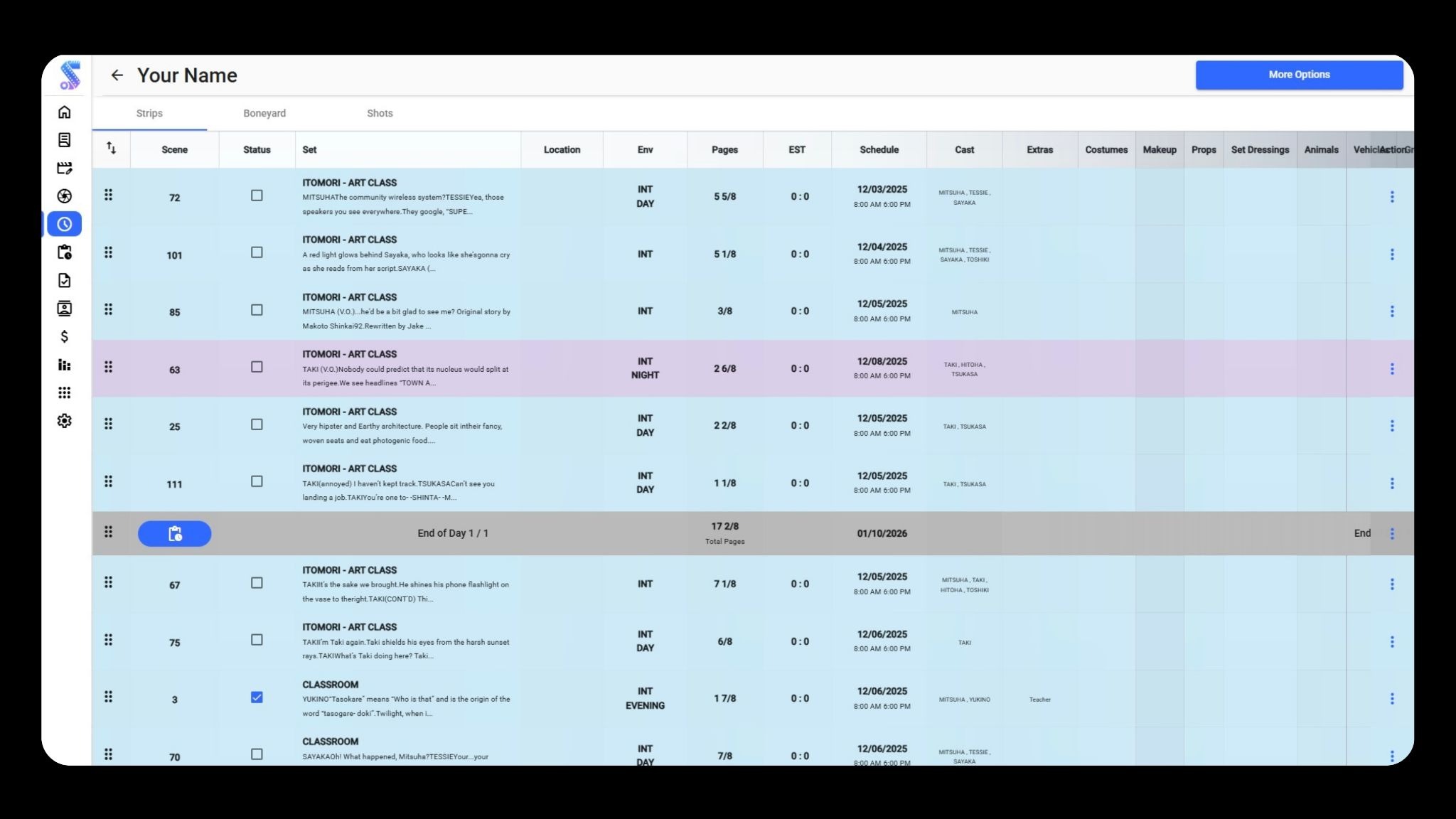
Scheduling has traditionally been the biggest time sink in pre-production, with assistant directors spending hours or days manually building stripboards around cast availability, locations, and department needs. Studiovity 2.0’s AI scheduling engine takes the breakdown data and auto-generates a full shooting schedule in as little as thirty minutes, organizing scenes by location, cast, and time of day, and updating instantly whenever something changes mid-production.
Schedules built this way aren’t locked into Studiovity either — they export directly into Movie Magic Scheduling (.mmsx) format, along with PDF, Final Draft (.fdx), Excel, and Fountain, so productions stay fully compatible with the industry-standard tools studios and partners already use.
AI Storyboarding and Shot Lists
AI Storyboarding and Shot Lists
Studiovity 2.0’s AI storyboard tools turn a finished script into detailed visual panels in minutes, complete with customizable camera angles and consistent character rendering across scenes. Paired with AI-generated shot lists that break scenes into precise camera setups, directors and cinematographers can walk onto set already knowing exactly what each shot should look like, cutting down on miscommunication and avoiding costly reshoots.
With Studiovity integration, filmmakers can quickly refine storyboard concepts, adjust shot sequences, and align visual planning with production requirements as scripts evolve. This connected workflow ensures that storyboards, shot lists, and production schedules remain synchronized, enabling directors, cinematographers, and production teams to collaborate more effectively while saving valuable pre-production time and maintaining creative consistency from script to screen.
AI Screenwriting and Script Editor
Every production starts with a script, and Studiovity 2.0 begins there too. Its AI screenwriting software includes a live, guided onboarding experience that walks new writers through the platform in real time — rather than leaving them to figure out formatting and tools on their own, the AI walks alongside them from the very first page, suggesting structure and refining dialogue as they go.
The screenwriting engine is built to:
- Refine dialogue and tone while preserving the writer’s own voice, rather than rewriting it into something generic.
- Catch structural and formatting errors automatically, keeping scripts industry-ready.
- Build Beat Boards for act-based structuring, so writers can see the shape of the story as they build it.
- Translate scripts across more than 350 languages, opening scripts up to global collaborators and markets.
Because onboarding happens live inside the actual writing environment, new users start producing production-ready pages almost immediately instead of losing time to a learning curve.
AI Script Breakdown: The Foundation for Everything Else
Once a screenplay exists, Studiovity’s AI script breakdown reads through it and automatically tags every production element — cast, props, wardrobe, locations, equipment, vehicles, and more — in a fraction of the time a manual breakdown would take. Because this breakdown is AI-generated directly from the script, it becomes the single source of truth that every other AI feature in Studiovity 2.0 builds on, from scheduling to budgeting to storyboarding.
AI-Integrated Budgeting
Budgeting is where a lot of productions lose control of their numbers, mainly because budgets are usually managed in spreadsheets that live completely separate from the schedule and breakdown. Studiovity 2.0 changes that by connecting its movie budgeting software directly to the AI-generated breakdown and schedule, so cost estimates, incentive tracking, and location comparisons update automatically as the production plan evolves. Real-time financial analysis means producers always know where the budget actually stands, not where it stood the last time someone updated a spreadsheet.
AI-Powered Call Sheets
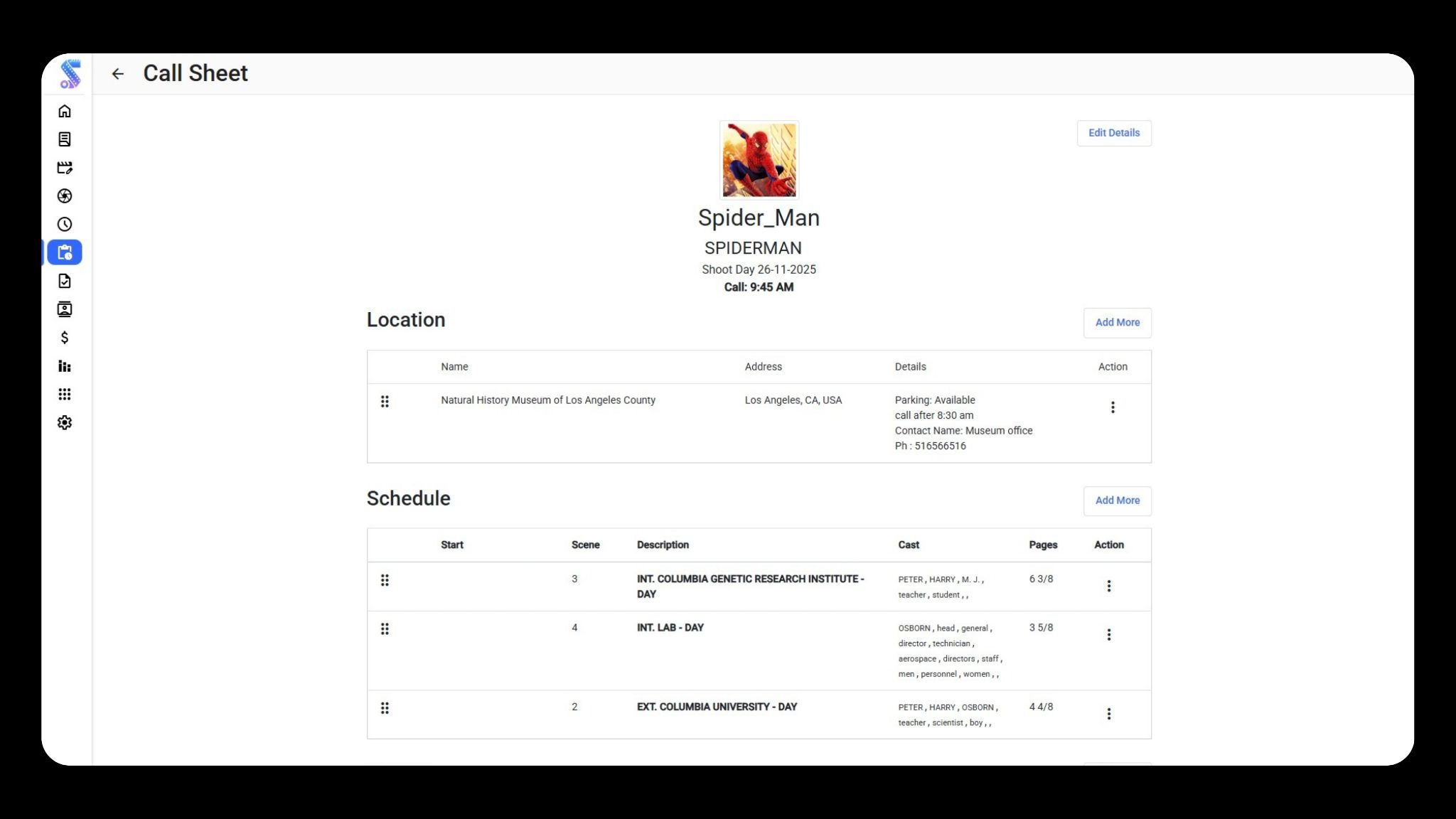
Call sheets are one of the most repetitive daily tasks on any production, and Studiovity 2.0 automates them using the same connected AI data. Call times, locations, scene numbers, cast requirements, and department notes are pulled directly from the schedule and breakdown, then compiled into a professional call sheet and distributed to cast and crew with a single click — complete with secure watermarking to protect sensitive production details. The generator adapts to any production type, whether it’s a feature film, commercial, music video, or fashion shoot.
The Rest of the AI-Connected Suite
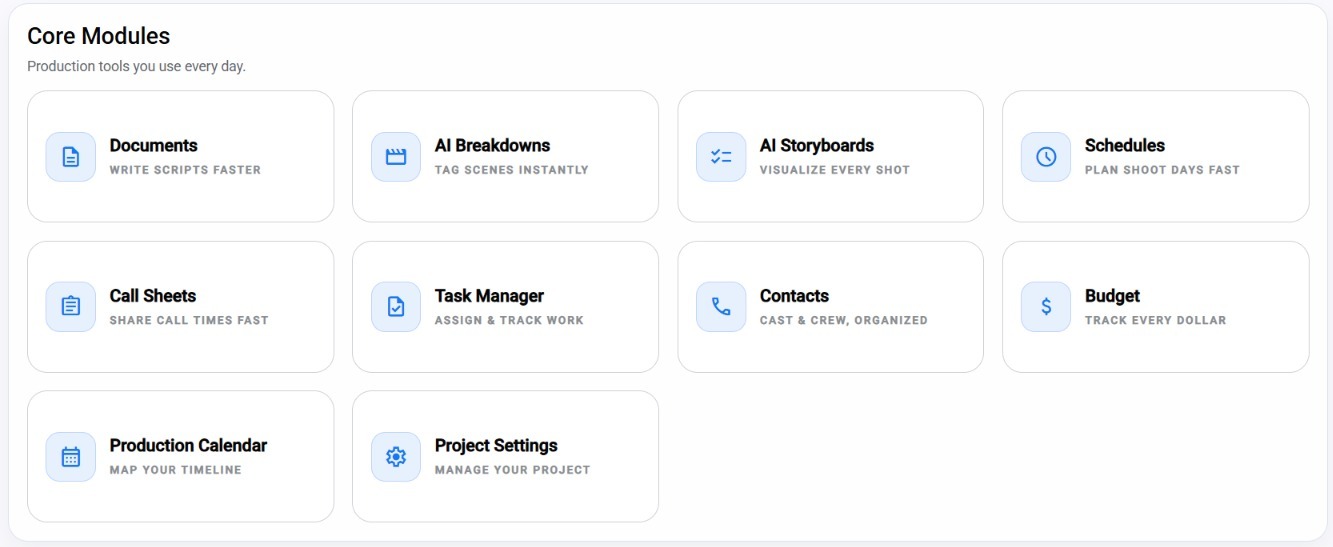
Beyond the core features above, Studiovity 2.0 rounds out the production workflow with tools that all plug into the same AI-driven system:
- AI AV Script Software — for producing professional multi-column scripts used in commercials and TV.
- Production Calendar — keeps the whole team synced on shoot days and key milestones.
- Cast & Crew Management — a centralized, real-time hub for contacts and department coordination.
- Task & Team Manager — Kanban-style boards for tracking production tasks across departments.
- AI Teleprompter Software — helps creators and on-camera talent record confidently while reading directly from the script.
Studiovity also integrates with tools productions already rely on — including Movie Magic, Final Draft, Celtx, Slack, Zapier, Google Calendar, and Outlook — so bringing AI into the workflow doesn’t mean abandoning the systems a production already runs on.
One AI-Powered Platform, Start to Finish
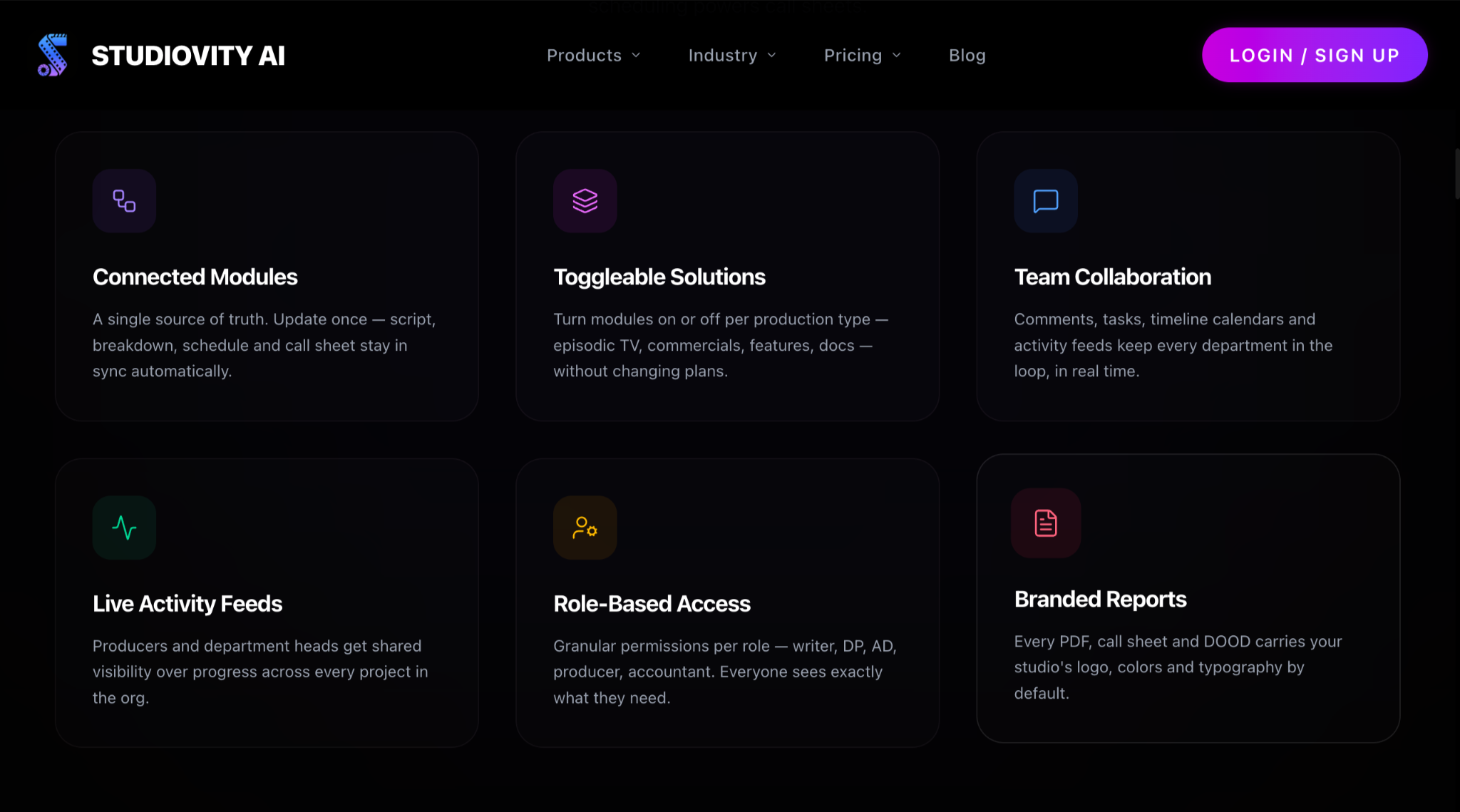
What sets Studiovity 2.0 apart isn’t any single AI feature — it’s that screenwriting, breakdown, scheduling, storyboarding, budgeting, and call sheets are all built on the same connected AI system. A change to the script updates the breakdown. A change to the breakdown updates the schedule and budget. A change to the schedule updates the call sheet. Nothing has to be rebuilt by hand, and nothing falls out of sync.
For independent filmmakers, production houses, and studios all being asked to do more with tighter budgets and shorter timelines, that kind of connected AI workflow is exactly what turns days of planning into minutes. You can explore the full platform and start a free trial at studiovity.com.
Related Articles
Studiovity Enterprise: The Complete Production Management Suite for Modern Studios

admin
Why Studiovity Is the Best AI Film Scheduling Software for Modern Filmmakers
admin

How to Annotate Video: A Complete Guide for Creative Teams
admin
Best Video Review Platforms for Creative Teams in 2026
admin
Latest Posts
-
Studiovity Enterprise: The Complete Production Management Suite for Modern Studios
-
Why Studiovity Is the Best AI Film Scheduling Software for Modern Filmmakers
-
How to Annotate Video: A Complete Guide for Creative Teams
-
Best Video Review Platforms for Creative Teams in 2026
-
Video Marketing for Startups: Pairing Storytelling with Customer Incentives
